
“Razz Bar 100K, assorted flavors” fits neatly in an email subject. On a purchase order it leaves a trail of unanswered questions. “Assorted” might mean three flavors in equal quantities to the buyer and any available mix to the seller. The nicotine option may be equally unclear. Even the published carton count doesn’t reveal whether several SKUs can share a master. Each uncertainty resurfaces somewhere else: on a print proof, at packing, in the freight estimate or beside a warehouse scanner. Settle what can be settled in the order file. Give the rest a named owner and a confirmation status. Published details should remain visibly different from order-specific answers.
Give the record a fixed starting point
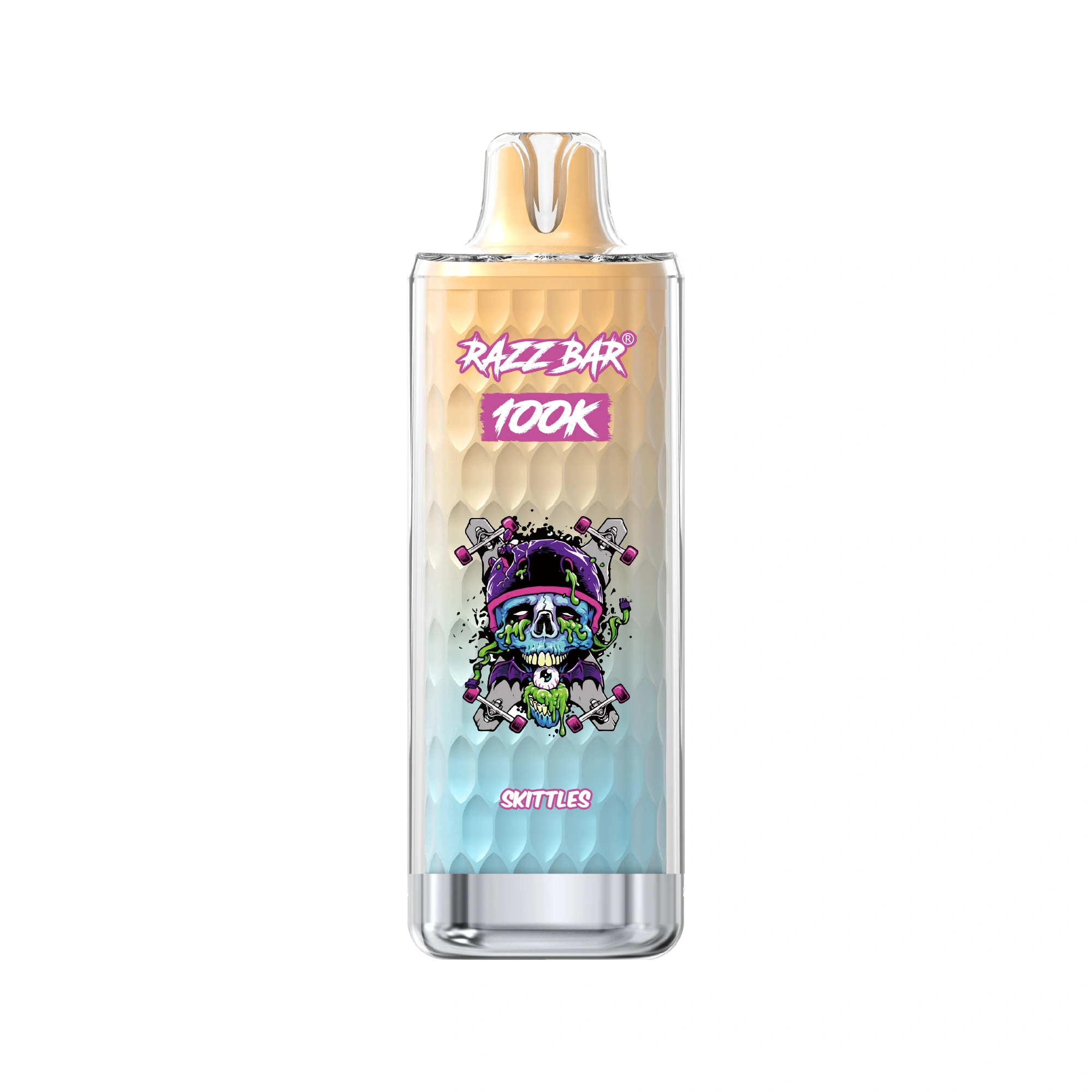
The opening lines identify Razz Bar 100K and point to the current Razz Bar 100K product listing. Beside the link, enter “reviewed 2 November 2026.” If the online wording changes before a repeat order, the earlier date explains which source version purchasing used.
The public Razzbar product catalog is a useful cross-check because it places the 100K within the current range. It isn’t specific enough to support the line item on its own. “100K” should never have to carry the whole identity; a number copied into a freight sheet or artwork email can easily lose its context.
An internal item code belongs beside the public name. RB100-SKI-2 could be perfectly serviceable shorthand inside one distributor’s system, provided its item master expands the code to Razz Bar 100K, Skittles, 2% and a named artwork revision. Sent to a supplier without that key, the same shorthand is only an invitation to guess.
Break one product sentence into order fields
The model details place seven entries in one block. They are 100K puffs, 2% or 5% salt nicotine, 200 pieces per carton, 16 flavors, a 650 mAh rechargeable battery, mesh coil and Type-C. Their presentation is uniform; their jobs in an order are not.
The flavor and nicotine entries are menus. Production needs a selection from each menu for every SKU. The battery line is different: 650 mAh is the capacity stated for the model, not an option the buyer selects. Mixing menus and fixed entries in one prose sentence is how an “or” survives into a supposedly final order.
A short specification block can separate them without becoming a dense form:
– source model and review date;
– buyer and supplier item codes;
– selected flavor and selected nicotine option;
– manufacturer-published puff designation;
– stated battery, coil and connector entries;
– required units and confirmed packing arrangement;
– device, box and carton artwork revision;
– evidence due before shipment.
Each field ought to accept one plain answer. “Stated battery capacity: 650 mAh” does. “Type-C fast charge” doesn’t: only the connector name appears in the reviewed details. Charge time and electrical input, if needed, get separate blank lines. They remain blank until the applicable documentation provides an answer.
Use full flavor names in the SKU matrix
Skittles, Coco Loco, Blue Razz Cherry, Blackberry Ice and Pink Samba are five of the 16 names shown. After selection, copy the reviewed spelling wherever that SKU appears. A box that says “Blue Razz Cherry” and a warehouse record shortened to “Blue Cherry” may describe the same unit, but a search or stock reconciliation will not necessarily know that.
Nicotine belongs beside flavor on each line. Selecting four flavors at both listed strengths creates eight rows in the worksheet. It does not create eight approved products. The supplier still has to confirm the configurations, and a qualified local reviewer still has to check authorization, nicotine limits, warnings and adult-only sale rules for the destination.
A blank can carry useful information. Mark an unassigned barcode “pending,” and use the same status for an unreviewed proof. Copying a neighboring code makes the sheet look complete at the cost of making it wrong.
Keep 100K tied to the wording that was published
The name and model entry use 100K as a puff designation. Preserve that wording. A purchase file does not become more informative by translating it into days of use, because the missing inputs would still be missing: draw duration, interval, operating conditions, recharge treatment and the endpoint of the count.
The appropriate line reads “manufacturer-published designation: 100K puffs.” Some destinations or sales channels may request supporting material. In that event, add the method or declaration actually received. Do not fill the gap with a days-of-use calculation based on an imagined personal routine.
Write 650 mAh under stated charge capacity, not under runtime. Put Type-C under connector, without adding an adapter, rate or USB Power Delivery claim. These labels still read correctly when the surrounding email thread is no longer available.
Do the carton calculation and then stop
Multiplying the stated 200 pieces by five cartons yields 1,000 pieces. Use that total only after the supplier confirms the stated packout for the chosen SKUs. Inner packs and mixing remain unanswered.
Consider 400 Skittles at 2%, 400 Blue Razz Cherry at 2% and 200 Pink Samba at 5%. At 200 pieces per master, the arithmetic gives five cartons. The line “5 CTNS” still says nothing about one-SKU masters, inner quantity or mixing. Quantity has been solved; configuration has not.
Ask for a numerical packing tree. How many units make an inner? How many inners make a master? Which masters belong to each SKU? Add dimensions, net and gross weight, barcode position and the mixing rule to the reply. Only then do pallet and freight decimals describe physical cartons rather than placeholders.
Keep sample approval separate from print approval
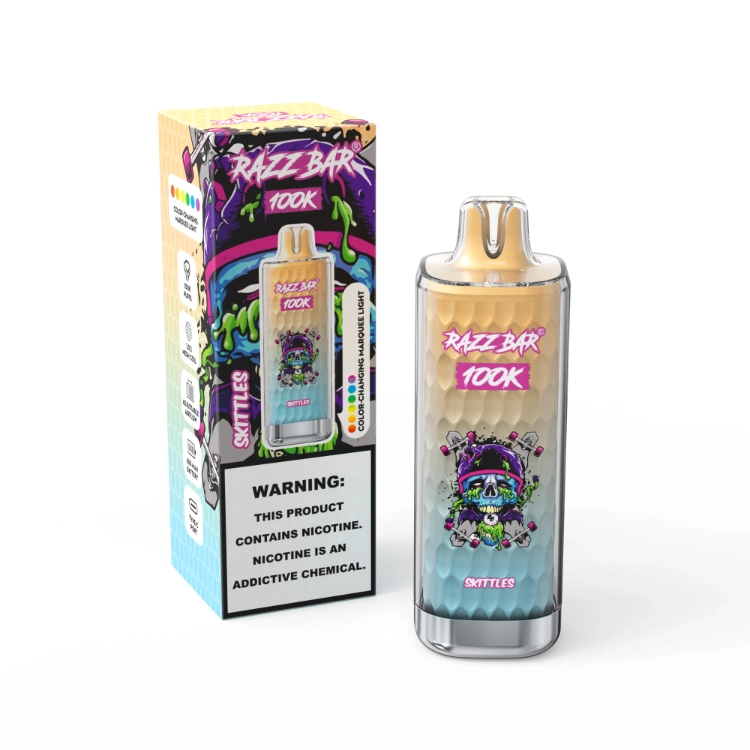
The picture pairs a device with its retail box. It is a useful identification reference, not one approval covering both objects. Nor can it measure an internal cell, represent every later lot or resolve the legal wording of a warning panel.
Give the sample its own sheet with identity, flavor-strength combination, receipt date and checks performed. Give the print proof another. On the proof record, note the result for SKU, flavor spelling, nicotine statement, model, barcode, lot-code position, importer details, language and warnings. A signature on the sample record cannot approve box text that wasn’t part of that review.
Security-code checking is another limited step. Where the delivered packaging has such a code, the official Razzbar verification tool tells the user to scratch the coating and enter or scan it. Record that result as a code check. It is not a product certificate, a laboratory report or a replacement for receiving inspection.
Write the receiving plan while the order is being agreed
Define acceptance while the order is open. The pre-shipment file can then state exactly what is due: final packing list and invoice, signed artwork, carton-label proof, lot identifiers and the declarations agreed for this shipment.
Receiving can use the list in order. Carton labels and quantities are reconciled first. A predefined sample is opened for packaging condition, device identity and the agreed functional checks. The file already says how many units are examined and what result triggers escalation, so neither party has to design a test after seeing an unwelcome outcome.
Number the specification. A change in flavor allocation can ripple into quantities, barcodes, box files and carton labels, so it deserves a dated revision and a retained predecessor. “Final-final-2” describes frustration, not document control.
Public information will not answer every order question. Send unresolved fields, not a vague request to “confirm specs,” to the Razzbar contact team. A returned table gives purchasing, artwork and receiving staff one traceable answer set.
Conclusion
A useful Razz Bar 100K specification begins where the product description ends. It fixes the source version, chooses a flavor and nicotine option for every SKU, records the stated 200-piece carton and hardware entries, and asks for the missing packout and evidence in writing. The current Razzbar information supplies a common reference point. The order file must still say exactly what this shipment is supposed to contain.
FAQ
Is 100K a guaranteed number of days of use
No. The current listing presents it as a puff designation. Turning it into days would require assumptions about draw behavior, operating conditions and the counting endpoint that the short entry does not provide.
Can a final SKU line show both 2 percent and 5 percent
No. A final line needs one selected option. Confirm that configuration with the supplier and review it against the destination requirements.
Can different flavors share the published 200-piece carton
The listing gives a piece count, not a mixing rule. Written packout confirmation should cover both flavor and nicotine allocation before freight is booked.
Can a packaging photograph replace the artwork proof
No. Use the photograph to recognize the presentation. Approve the print file only after its SKU, flavor, nicotine statement, warnings, language, barcode and lot-code fields have been read.
What should trigger a new specification version
Revise the file when flavor allocation, nicotine option, artwork, barcode, quantity or packout changes. Retaining its predecessor shows production and receiving exactly what the new version replaced.