The courier box is open, six people have handled the sample, and the buying chat already says “looks good.” That is exactly when approval becomes slippery. Was the team accepting the color, the printed box, the flavor label, or the complete product? A useful sample record turns that casual reaction into a decision that purchasing and receiving can still understand three months later.
Write one sentence at the top of the review: “This sample is for approval of…” Then finish it plainly. A stock unit may help a buyer choose a model. A decorated unit can show color and artwork. A pre-production unit may become the physical reference for one purchase order. Those are different jobs.
The distinction prevents a common argument. Sales may believe a sample was accepted in full, while the buyer remembers approving only the outer design. Neither memory is a reliable production instruction.
Keep the promise realistic. A sample received today cannot prove how an unmade production lot will perform. It can establish the agreed version and show which checks must be repeated later. For a configurable order, list what is present and what is still open: model, flavor, nicotine option where applicable, device color, artwork, pack-out, or destination-specific wording.
The current Razzbar range includes several capacity tiers and formats. “The big one with a screen” is not an identity. Copy the model wording from the product, package, quotation and current product catalog, then resolve any difference before approval.
Give the parcel a name before the pieces separate
Assign a sample ID as soon as the box arrives. Something as plain as `RB-S26-04` works if the same code appears on the review sheet and in every photograph filename. If there are three units, add A, B and C. This small step is less glamorous than product testing; it is also what stops a photograph of unit B from becoming evidence for unit A.
Record the supplier reference, buyer project, exact model, variant, quantity, receipt date and the quotation or specification used for comparison. Photograph the unopened parcel, each retail box, the device, and visible batch or version marks. Keep the original image files rather than a collage copied from a messaging app.
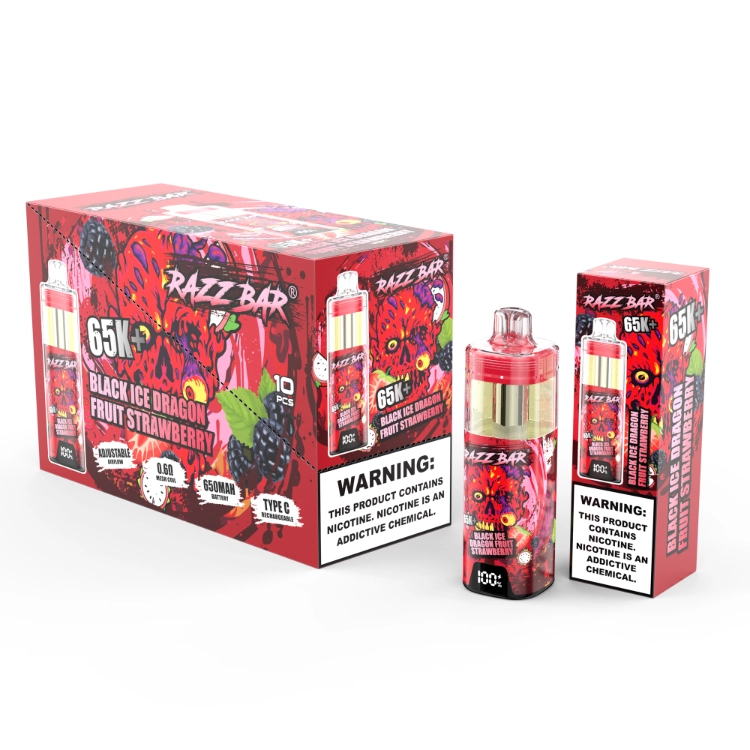
Copy printed text as it appears. Do not quietly repair a missing character or change `65K+` to `65K` because the difference seems minor. Put the quoted wording and sample wording side by side. The discrepancy may be harmless, but someone should decide that rather than letting an autocorrection make the decision.
For example, the published Razz Bar 65K+ product page currently states 65K+ puffs, a 650mAh rechargeable battery, Type-C charging, a mesh coil, 16 flavors, 2% or 5% nicotine options, and 200 pieces per carton. Those are useful public references. The buyer still needs to match the actual sample to the quoted configuration and intended market.
Keep “printed on the box” separate from “we checked it”
One review sheet can hold two columns: expected or declared; observed. That simple split prevents accidental claims. A reviewer can observe that `650mAh` appears on a package. The reviewer has not independently measured battery capacity merely by reading it.
Use the same discipline for puff count, coil description, nicotine statement and carton quantity. Match declared fields across the quotation, product page, approved artwork and physical package. If independent performance, content or laboratory work is required, make it a separate gate with its own method and owner.
This is also where photographs beat adjectives. “Printing good” tells the next person very little. A front, back and side image can show model spelling, warning area, barcode, flavor name, origin field and revision mark. Add a close view when a fold, crop or small type is under discussion.
Review the package as a physical object
Artwork can look perfect on a monitor and fail on a folded box. Check whether text crosses a crease, whether a barcode sits on a curve, whether the device is secure, and whether an insert covers a required field. Compare the unit box, display box and available master-carton reference. Note which level was not supplied.
Destination requirements are not universal. The responsible compliance reviewer should decide whether warnings, nicotine wording, marks and language are acceptable for the intended market. Sample approval should never turn a generic package into evidence of legal acceptance everywhere.
Give packaging issues their own numbers. “Flavor name on side panel does not match approved artwork” is reviewable. “Box needs changes” is not. When a corrected proof arrives, check the affected panel and nearby fields again; moving one element can disturb another.
Razz Bar 65K+ device and unit-box reference for packaging and sample checks. Source: Razzbar project asset library.
Use a short routine that another reviewer can repeat
Write down who checked the sample, when, how many units were present and what counted as pass, fail or observation. The routine should follow the buyer’s qualified procedure and the exact product. Depending on the agreed scope, it may cover visible condition, assembly, activation, airflow, screen response, charging response, switching functions or visible leakage.
Avoid converting casual use into a laboratory report. “Feels fine” and “good flavor” are difficult to compare with a corrected sample next week. Describe the action and result instead: “Unit A display illuminated when connected with the recorded Type-C cable,” or “Unit B flavor label differed from the unit box.” If a measurement matters, use the approved equipment, conditions and acceptance limit.
Razzbar’s company and manufacturing overview describes product development, manufacturing and inspection activities. That background does not replace the buyer’s order-specific review. The approval file should show what the buyer actually examined and what supplier evidence remains due.
Do not approve a cloud of exceptions
“Approved subject to changes” sounds efficient until production asks which changes. Open an issue for every unresolved difference. Give it an owner, expected condition, photograph, response deadline and one outcome: correction required, clarification required, accepted deviation or rejected proposal.
Suppose the device color is accepted, the box crop is not, and the barcode is still missing. The record should say exactly that. A corrected print proof might close the crop and barcode issues without requiring another functional sample. A device construction change would deserve a different review. The route depends on impact, not on the convenience of calling everything approved.
When the final gates close, identify the approved sample by ID, version, photographs and date. Retain one reference unit when practical and state who controls it. Attach the decision to the purchase order or a controlled appendix. A sample forgotten in a salesperson’s drawer is not a usable standard.
Carry the decision into production and receiving
Give the later teams a compact reference pack: approved model and variant, sample ID, package version, dated images, order reference, accepted deviations and the person authorized to decide exceptions. Receiving should not have to search an old chat to learn whether a label difference was accepted.
Also define what reopens approval. A revised artwork file, changed configuration, new component, different flavor or nicotine option, or altered charging description may require a document check, a fresh sample or a limited recheck. The right level depends on the change and the buyer’s agreement.
The Razzbar laboratory page can help buyers frame technical questions, but the order file should contain only conclusions supported for the exact sample. The retained unit is a comparison point, not a promise that later production cannot vary.
Conclusion
A useful sample approval is not a ceremonial signature. It says what was reviewed, ties the decision to an identified version, and leaves unresolved points visible. Name the sample, separate declarations from observations, inspect the physical package, record repeatable checks and close each issue. Then purchasing, production and receiving can all answer the same question: which product did we actually approve?
FAQ
How many units should a buyer review
There is no universal number. Choose it according to the decision, the checks, the buyer’s qualified plan and any market-specific requirement. Record both the quantity and how the units were selected.
Is a photograph enough for sample approval
It can support identity or artwork review. It cannot replace a physical unit when fit, finish, assembly, operation or package construction must be checked. State what the photograph approves and what remains open.
What is a retained reference sample
It is an identified unit kept with the approval record for later comparison. Label it with the sample ID, version, date and owner. It does not replace production inspection.
Can one flavor sample cover every ordered flavor
Only where the buyer’s documented plan and evidence support that scope. Flavor names, printed variants, nicotine options and availability can differ by SKU, so record which variants were physically reviewed.
What if the supplier changes the product after approval
The supplier should identify the change and affected order before release. The buyer can then choose a document review, limited recheck, new sample or full approval according to the impact.