There is a small but consequential difference between writing “650 mAh rechargeable battery” and writing “650 mAh of all-day battery life.” The first records a capacity. The second promises a duration. With the RAZZ BAR 60K, we can check the wording against the published listing. Does it actually give a duration, or have we supplied one ourselves? Reading the battery entry this way also helps with the other two details considered below, the puff total and USB-C connection.

The listing used for this explanation
The starting source is the RAZZ BAR 60K product page. Its battery entry reads 650 mAh and identifies it as rechargeable. Elsewhere in the same details are the 60,000-puff figure and the mesh-coil and Type-C entries. The version shown on that page is described as having a crystal texture. These entries give us a starting point for reading the specification; no sample was tested for this article.
A technical file may be read long after the webpage has been closed. If all it contains is “battery 650 mAh,” the reader has no way to identify the item. Adding RAZZ BAR 60K and the source address takes little space and preserves the connection. This becomes especially useful when several sets of product information are kept in the same file.
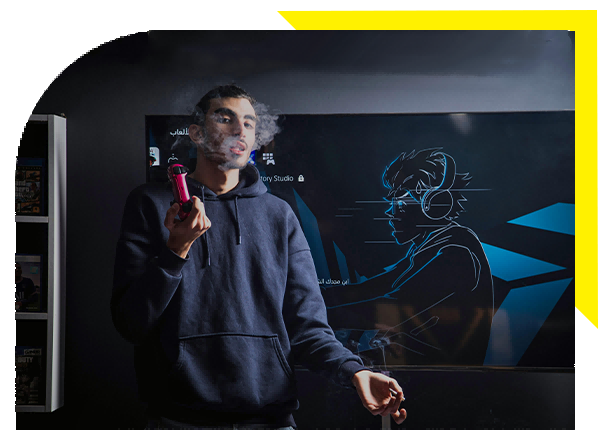
An exterior reference image can accompany that note. It can help a reader recognise the exterior or distinguish the device from its packaging. What it can’t do is measure the cell inside. Even a clearly printed capacity on the box is still a stated value, not the result of a capacity test carried out by the person viewing the image.
Working through the battery unit
Read the final letter in mAh together with the rest of the unit. It stands for hour, but the complete expression is milliamp-hour: current multiplied by time. Dividing the numerical value by a thousand expresses it in amp-hours instead, giving 0.65 Ah here. No time estimate has been calculated by making that conversion.
Here is a deliberately simple calculation. Multiply ten hours by 65 mA and the result is 650 mAh. Now double the current to 130 mA. Five hours is enough to reach the same product. We’ve changed the current and the time while keeping their product unchanged. Neither current in this example was measured on the 60K, and neither duration is a runtime estimate for it.
The arithmetic explains why a capacity label needs more context before it becomes a useful prediction. We would have to know the current demand. We would also need to know how much of the rated capacity was available under the conditions being considered. Once a device alternates between active and idle periods, describing that pattern becomes part of the problem too.
Watt-hours answer a related question about energy. A nominal energy calculation multiplies amp-hours by nominal voltage. For this calculation we have only one of the two inputs. The short listing gives capacity but no nominal cell voltage. It would be easy to borrow a voltage from another battery, yet doing so would leave us calculating the energy of an assumed configuration. There would be no basis for printing that answer as a 60K specification.
Consider what happens if a comparison sheet has a column headed “battery life” containing nothing but mAh values. The heading has changed the question from charge to duration. Renaming the column “stated capacity” repairs that mismatch. Comparing actual durations is a separate task, for which the operating conditions and duration results would need to be available.
Defining the event behind a puff count
A puff counter records an event. The counter can add one after a short draw and one after a longer draw. From the count alone, a reader couldn’t tell which draw took longer. That information has to come from a description of the procedure. Even a perfectly accurate count would leave this question unanswered.
One published example is CORESTA Recommended Method 81 from June 2015, a method for routine aerosol generation and collection. In that procedure each puff lasts three seconds and has a volume of 55 mL. The next begins 30 seconds after the start of the previous one. Those settings describe a machine procedure. They are neither a recommended personal-use pattern nor evidence of the procedure used for this particular product.
An endpoint introduces a further distinction. In a hypothetical report, the first need for recharging could end the count. Another allows recharge pauses before continuing to a specified endpoint. Even if both use the same draw settings, their totals cover different things. Without a note explaining the recharge pauses, a reader could mistake one total for the other. A methods section needs to account for those pauses as well as the stopping rule.
The 60,000 figure in the listing isn’t accompanied by that procedural detail. It can be attributed to the manufacturer as a published specification, but the number doesn’t let us reconstruct the test. A duration expressed in days would be even further removed from the available information, since we would have to assign a frequency to the draws as well.
The earlier article on puff count and battery capacity discusses the distinction across specification entries. For this model, the capacity and count can be recorded independently. A later editor can then shorten the description without having to untangle a sentence that appears to promise the whole puff total from one charge.
What the connector name contributes
Type-C is the part of the entry concerned with the connection. USB-C is another name for that connector system. The USB-IF terminology guidance separates it from USB Power Delivery, which has its own specification. Seeing the connector name on a specification sheet therefore doesn’t establish Power Delivery support.
A duration would need a different kind of description. How much charge was already present when timing began? What input was permitted, and how did the device control charging? A connector description cannot fill in those details. On the 60K page, it is a hardware entry rather than a timed test result.
It may be tempting to combine the 650 mAh value with a current printed on a charger and divide one by the other. But the current a charger can supply doesn’t tell us what a particular device draws throughout charging. We would therefore be dividing by a number whose relevance to the device had not been established. More decimal places in the answer wouldn’t resolve that problem.
The documentation accompanying the model is where actual charging instructions should be checked. When transcribing an input rating from it, there is a reason to keep the unit attached: a current in amperes and a power in watts are different quantities. A phrase such as “fast charging” would discard that information and add a performance claim instead. No adapter rating or full-charge time is assigned to the 60K in this article.

Keeping a technical record traceable
A record headed Razzbar identifies the brand. To retrace a specific value, though, a reader still needs the model-page address and the date on which it was reviewed. If the online text changes later, those details explain why an older note may differ. They also make it possible to check the wording instead of relying on memory.
A measured charging time would bring a sample and a procedure into the record. Someone should be able to establish which sample was timed, its starting condition and what counted as the end of charging. Merely placing that number beside a published capacity wouldn’t establish a relationship between them.
Keep that distinction for the other component entries as well. A mesh-coil description tells us the stated coil type. It doesn’t supply resistance or operating wattage. If those quantities become relevant to an analysis, they need their own source rather than a deduction from the word “mesh.”
All product values used here can be traced back to the manufacturer’s model listing. The calculations illustrate units rather than the performance of a tested sample. Keeping that distinction visible is what allows the same technical file to hold published information and, if available later, actual measurements without confusing the two.
Frequently asked questions
Does 650 mAh mean 650 minutes of operation?
No. The label gives charge capacity. There is no conversion to minutes unless current demand and the relevant operating conditions are also known. The number can stay at 650 while the duration in an arithmetic example changes.
Does the 60K figure describe one battery charge?
The reviewed product entry doesn’t say “per charge.” It lists a rechargeable battery separately. Adding those words would change the meaning of the puff claim, so a per-charge interpretation needs supporting test information.
Does Type-C confirm fast charging?
Type-C supplies the connector name. To claim a particular rate, we would need the relevant electrical information or a timed test. The name also leaves Power Delivery support unconfirmed; these are separate entries to check in model documentation.
Can the mesh-coil label establish electrical power?
The mesh description doesn’t include a wattage. A field for power would still need a value from another source, even after the coil-type field had been completed. There is consequently no puff-per-charge calculation to make from those words alone.
What is the clearest way to summarise these specifications?
A short record can identify the 60K, link to its listing and reproduce the relevant entries with their units. If the form also asks for charging time, an unfilled field is more accurate than a time derived from an assumed current. The missing value can be added when supporting information becomes available.