
Puff count is the number everyone looks at first when shopping for a high-capacity vape bar. Fair enough — it’s the headline figure. But it’s honestly only one piece of the puzzle. Battery capacity, how the device looks and feels, the way it’s actually built, the factory’s quality-control habits, and whether you can even verify the thing is genuine — all of that matters just as much when you’re sizing up a device.
Take Razzbar as an example. The company has been making electronic cigarettes since 2015, so they’ve been through product development, design, and manufacturing cycles for nearly a decade now. Their company materials talk up product quality, technical development, and consistency on the production line. None of that is unusual for a brand to claim, obviously, but it does give you a baseline for how they approach engineering and production.
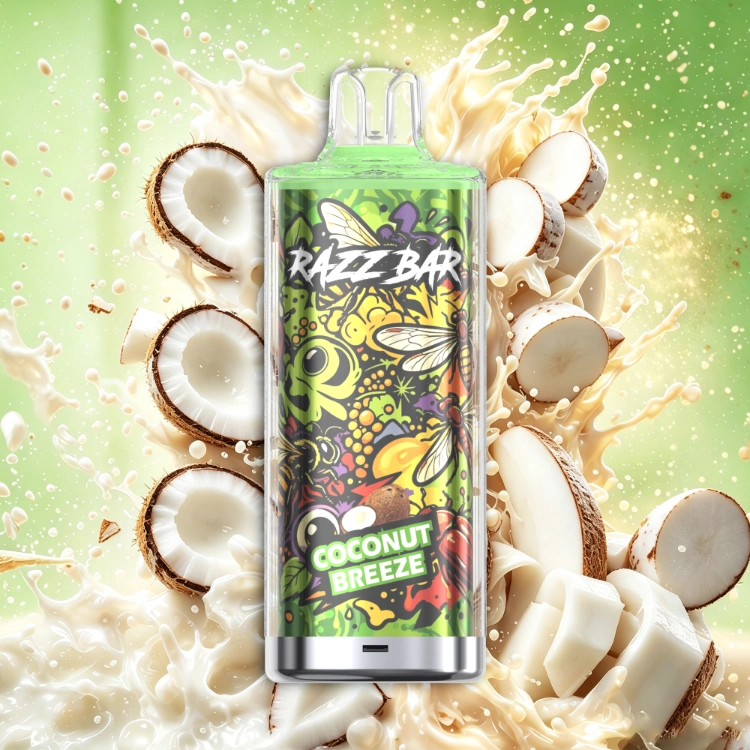
Their flagship here is the RazzBar 60K, and per the company’s own product information it comes with a crystal-inspired design, an advertised capacity of up to 60,000 puffs, a 650mAh battery, and 16 flavor options. Look at those documented specs next to the wider picture of who’s making the device, and you start to get a much clearer read on the product — and on what actually goes into judging a vape in the first place.
Understanding the RazzBar 60K Specifications
Start with the spec sheet. Always. It’s the foundation for understanding how a device is configured, and going through each line one by one helps you separate what’s actually measurable from what people just assume about performance.
Advertised Puff Count
The RazzBar 60K is advertised for up to 60,000 puffs. Key word there: advertised. That figure describes the manufacturer’s stated capacity — it is not a guarantee that every single unit will hit exactly that number.
Actual results vary depending on puff length, how often someone vapes, and the conditions the device sits in. Treat the advertised capacity as one data point among many — not as the beginning and end of quality or durability.
When comparing products, read the manufacturer’s documentation properly and make sure the specs you’re looking at belong to the actual device in front of you. Sounds obvious. It gets skipped all the time.
Battery Capacity and Exterior Design
The published product description lists a 650mAh battery and a crystal-inspired exterior design. Two different things, worth keeping separate in your head: one is the battery’s rated capacity, the other is simply how the device presents itself.
And here’s the thing — battery capacity on its own doesn’t tell you total operating time. Neither does a nice-looking shell tell you anything about performance. Both details only mean something when you read them against the full product specification.
For more background, the official RazzBar product catalog is a reasonable starting point for browsing the company’s range.

Battery Capacity and Product Evaluation
Understanding battery specifications is actually helpful when you are comparing devices that have rechargeable batteries. Just don’t confuse the two: e.g. battery capacity and puff count (advertised) are different metrics, but not interchangeable measurements between each other. Just don’t confuse the two numbers: battery capacity and puff count are different beasts, also not interchangeable measures. Not even close.
Understanding the 650mAh Specification
Milliampere-hours — mAh for short — is the unit used for a battery’s rated capacity. The RazzBar 60K ships with a 650mAh battery, according to the listing.
Useful reference? Yes. A promise of runtime under every possible condition? No. It doesn’t work that way.
Buyers should check the documentation for the exact product version for anything extra about charging, battery handling, and compatible equipment. With rechargeable devices, following the manufacturer’s instructions isn’t optional housekeeping — it’s how you handle them safely.
Why Complete Product Information Matters
One spec almost never tells you enough to judge a whole device. A proper review pulls together the published product details, whatever documentation exists, and the manufacturer’s own explanation of the configuration.
For distributors and retailers this is even more critical, as exact specs directly feed into catalogs, product descriptions & stock records. Verify data against the specific model — do not generalize from a product with siblings in the same family. This simple habit prevents manufacturer documentation, commercial listings and the things that customers are told from drifting out of sync.
Exploring the Available Flavor Selection
Flavors are the other half of the product description, and they deserve the same careful reading. A clearly documented flavor lineup tells you the range the manufacturer offers — without anyone having to guess at ingredients or sensory details.
A Selection of 16 Flavors
The RazzBar 60K product information lists 16 flavor options. Blueberry Sour Raspberry and Gummy Bear get called out as examples, which gives you a feel for the spread: berry-inspired names on one end, familiar confectionery references on the other.
One caution, though. Flavor names don’t tell you the actual ingredients or formulation of anything. Keep descriptions aligned with the manufacturer’s documentation — that’s the only safe ground for product communication.
Confirming Market Availability
Flavors and configurations don’t sell everywhere. Local rules decide what can legally be sold or distributed in a given market, and those rules shift.
Therefore, prior to developing listings or orders retailers and distributors should confirm current availability together with requirements that apply. What they must comply with is ages and places where nicotine does not reflect the role/age in product labeling, packaging or a wider range of uses. So in the realm of products containing nicotine, it has to comply with age limits or labeling regulations — and those can not be violated.
The official RazzBar product range works as a reference point for the company’s published product information.
Laboratory Research and Engineering Development
Step back from one device and look at the lab work, because that’s where a manufacturer’s engineering approach shows itself. Razzbar’s laboratory materials describe research into mesh structures, heat distribution, and e-liquid absorption.
These materials explain the company’s broader technical thinking. What they don’t do is confirm that every technology described made it into every product model. Keep that distinction in mind.
MORPH-MESH Technology
According to the company’s laboratory description, MORPH-MESH uses a dual-density mesh structure — thicker at the edges, ultra-fine at the core — designed to work alongside the wick’s absorption pattern.
The stated engineering goal is more uniform heat distribution and flavor extraction. Whether or not you care about the marketing wrapper, the underlying idea is a sensible one: heating structure and liquid absorption materials should be designed together, not in isolation.
For any individual product, verify the actual implementation against its own technical documentation. Don’t infer it from general lab material.
Wick Structure and E-Liquid Absorption
The lab materials also describe an enhanced porous cotton structure meant to improve e-liquid absorption and saturation. Again, the company’s explanation stays at the level of material structure and liquid flow — the mechanics of its engineering work.
Descriptions like this help you understand what goes into developing a vaping device. But general laboratory claims are not proof of how any particular model performs. Worth repeating, because it’s where a lot of buyers get tripped up.
Readers curious about the company’s research direction can dig into its laboratory technology and engineering information directly.
Manufacturing Capabilities and Quality Control
How something gets made matters as much as what gets made. Material selection, production monitoring, component inspection, final testing — this is where a manufacturer’s quality-management story is either real or it isn’t.
Razzbar’s company profile describes its manufacturing experience and its focus on product development, production, and quality control.
Factory Experience and Production Capacity
Per the company information supplied, Razzbar was established in 2015 and develops, designs, and manufactures disposable and cartridge-type electronic cigarettes and related components.
The profile mentions more than 10 production lines and a stated monthly production capacity of up to 3 million units. OEM and ODM services are listed among the company’s manufacturing capabilities too.
For businesses sizing up a potential manufacturing partner, that context is useful. One caveat: stated production capacity is not the same thing as current inventory, open production slots, or the lead time on your specific order. Those are different conversations.
Business buyers should confirm current capacity, order requirements, and production schedules directly with the manufacturer. Directly. Not through a spec sheet.
Raw Material Inspection and Production Monitoring
The factory information describes quality-control procedures spanning incoming raw material inspection, production monitoring, assembly, and final product testing. The stated approach also covers inspecting components, monitoring the manufacturing process, and maintaining production equipment to keep output consistent.
This tells you what the manufacturer says it does at the QC level. For a specific product or batch, buyers may still want to review test reports, supporting records, and other quality documentation on request.
More on the company’s background and stated manufacturing capabilities is available through its official company profile.
Certifications and Regulatory Requirements
The company profile references international certifications and quality-related standards. Important nuance here: company-level credentials and product-specific approvals are not the same thing, and mixing them up causes real problems.
Buyers should verify the validity, scope, issuing organization, and applicability of any certification or test report for the exact product being purchased.
And regulatory requirements? They depend entirely on the destination market. Product authorization, labeling, nicotine restrictions, other compliance obligations — all of it needs checking before products get imported, marketed, or distributed. Before, not after.
Product Verification and Authenticity
Specs and factory info are one thing. Whether the unit in your hand is genuine is another question entirely, and an official verification process is the practical way to answer it.
How the Verification Process Works
Razzbar’s verification instructions are straightforward: scratch off the protective coating to reveal a security code, then either enter the code or scan the QR code with your phone.
Follow the manufacturer’s instructions and you’ll get to the verification result. If a code won’t verify, or the information looks off, contacting the manufacturer is the sensible next move.
The official Razzbar verification page has the full instructions.
Additional Checks for Business Buyers
Verification is one part of a bigger supplier review. Businesses will typically also need to keep purchase records, invoices, shipping documents, and any product compliance records on file.
Where it makes sense, confirm that product identifiers, packaging details, and specifications match the items actually supplied.
These checks matter most for businesses juggling multiple product configurations or sourcing through several distribution channels — exactly the situations where mix-ups happen.
Considerations for Distributors and Wholesale Buyers
For wholesale buyers, evaluation goes well beyond the technical specs. Packaging, order requirements, production schedules, documentation, destination-market rules — all of it feeds the purchasing decision.
Razzbar’s company information describes in-house development, design, and manufacturing, together with OEM and ODM services.
Packaging and Order Planning
The supplied RazzBar 60K product information covers the advertised capacity, battery specification, flavor selection, and exterior design. Commercial buyers should get a current quotation and pin down packaging and logistics details for the exact configuration.
The details that actually bite later: carton quantity, carton dimensions, gross weight, minimum order quantity, delivery arrangements, and expected lead time.
None of these should be inferred from general company information or from specs belonging to a different model. Confirm them with the supplier, in writing.
OEM and ODM Manufacturing Services
The company profile describes OEM and ODM capabilities, including product development, design, and manufacturing — potentially relevant if you’re weighing a customized manufacturing arrangement.
Before committing, get clarity on the scope of customization, available design options, minimum order quantities, production timelines, quality documentation, and who owns the resulting design assets.
And whatever configuration gets proposed has to comply with the regulations of its intended market. Full stop.
Reviewing Company News and Updates
Company announcements add context about business activity and product developments. Read them alongside the official product catalog and company profile, and you’ve got a decent framework for a first-pass supplier assessment.
The official Razzbar website carries the company’s main information, and the company news section holds published announcements and updates.
Useful? Yes. A substitute for directly confirming specs, availability, and order documentation? No. They complement that process, they don’t replace it.
Conclusion
Judging a high-capacity vape bar takes more than comparing puff counts. Battery specs, flavor information, design, manufacturing procedures, authenticity checks — each one adds a layer to the picture.
The RazzBar 60K is described in the supplied product information as featuring an advertised capacity of up to 60,000 puffs, a 650mAh battery, 16 flavor options, and a crystal-inspired design. That’s a clear starting point for reviewing the product, and the company’s laboratory and manufacturing information adds context on the wider engineering and production approach.
For distributors and wholesale buyers, the manufacturer’s stated production capabilities, quality-control procedures, and OEM/ODM services may also factor into evaluating a potential supplier. Company-level details should be weighed alongside model-specific documentation, product verification, and the legal requirements of the intended market.
In the end, accurate specifications, transparent documentation, and careful verification are what make a product evaluation responsible. Nicotine-containing products are addictive and are not risk-free. Applicable age restrictions, health guidance, and local regulations should always be observed.
FAQ
What is the advertised capacity of the RazzBar 60K?
The supplied product information advertises a capacity of up to 60,000 puffs. Actual puff counts may vary according to usage patterns and operating conditions, so the advertised figure should not be treated as a guaranteed individual lifespan.
What battery capacity is listed for the RazzBar 60K?
The product information identifies a 650mAh battery. Additional battery and charging specifications should be confirmed using the documentation for the exact product version.
How many flavors are available for the RazzBar 60K?
The supplied product description lists 16 flavor options and highlights Blueberry Sour Raspberry and Gummy Bear as examples. Current availability should be confirmed with the manufacturer, particularly when purchasing for a specific market.